米海兵隊岩国航空基地 -- 米海兵隊岩国航空基地で航空機が基地北側より南向きで進入して(滑走路20の)着陸を行う際に新しい計器進入方式がこのほど導入された。これは全日本空輸(ANA)、国土交通省航空局(JCAB)、米連邦航空局(FAA)、米海軍航空情報部(NAVFIG)のご協力の賜物であり、航空安全及び運用能力において画期的な出来事である。
岩国基地司令のケネス・ロスマン大佐は、「岩国で運用している全ての航空機が南向きで滑走路に進入する際に計器進入方式を取り入れる選択肢を得るのは、岩国基地の歴史で初めてのことである。」と語った。「航空安全、運用効率、そして軍用機と民間機の双方の航空管制を安全に管理する能力を高めることは、基地にとって極めて大きな前進である。滑走路の反対側へ回りこみ複雑な着陸手順を取らざるをえない状況を減らすことで、我々は航空機をより効率的に動かし、従来よりも安全かつ予測の立ちやすい運用環境を提供できる。また、今回の成果は日本政府や民間航空の運用に携わる方々との不朽の協力関係の強さを表すものである。」とロスマン大佐は語る。
二年以上に及ぶ年月をかけて全日本空輸、航空局、FAA、NAVFIGとの連携のもと、岩国基地の主導で計画、調整、試験、許認可が行われ、ついに7月9日、全日本空輸において新手順の運用が開始された。
数十年間、岩国基地を取り囲む地形的要因により、航空機が南向きで進入する際に、滑走路に向かって真っすぐ進入する安全な計器進入方式の導入は困難とされてきた。そのため、航空機は悪天候の際、パイロットと航空管制官の双方の作業量を増やしながら航空運用の効率性を下げる、複雑な到着手順に頼らざるを得ない場面がしばしば発生した。
全日本空輸フライトオペレーション推進部の後藤研氏は、「全日本空輸は、この歴史的なプロジェクトで岩国基地と手を取り合って協力してきたことを光栄に思う。」と語った。「この新しい手順は私達の運用の安全性と効率性における著しく大きな前進を表している。二年以上にわたりご尽力、ご協力くださった全ての方に心より感謝申し上げたい。皆様と力を合わせることで、お客様と航空業界の両方に資する能力をお届けすることができた。」と後藤氏は語る。
岩国基地の管制・空域マネージャー、マックス・ウィリアムズ氏はこのプロジェクトは軍民の航空機関の緊密な協力の成果であると語る。
ウィリアムズ氏は、「この取り組み全体を通して常に卓越したパートナーシップを発揮してくださった全日本空輸に心より感謝したい。」と述べた。「全日本空輸の高いプロ意識、技術的な専門的知見、さらなる航空安全への断固たる決意なくして実現はありえなかった。この計画は、共通の目標に向かって二か国の機関がともに邁進したときに成し遂げられる成果を体現するものだ。全日本空輸、航空局、FAA、NAVFIGと力を合わせて我々は固有の試練を乗り越え、岩国基地での航空運用の安全性と効率性に持続的な改善をもたらすことができた。」とウィリアムズ氏は語る。
新しい計器進入方式の導入により、悪天候の際の航空運用が改善され、遅延が減少し、滑走路運用の効率が高まり、岩国基地と民間航空関連機関との長きにわたる協力関係がより強固になることが期待されている。計画は、岩国基地の計器飛行能力を高める上で、基地史上最も重要な変化の一つであり、安全性を高め、効率的にかつ信頼性の高い航空運用を進めることへの日米の航空機関の確固たる決意を示している。
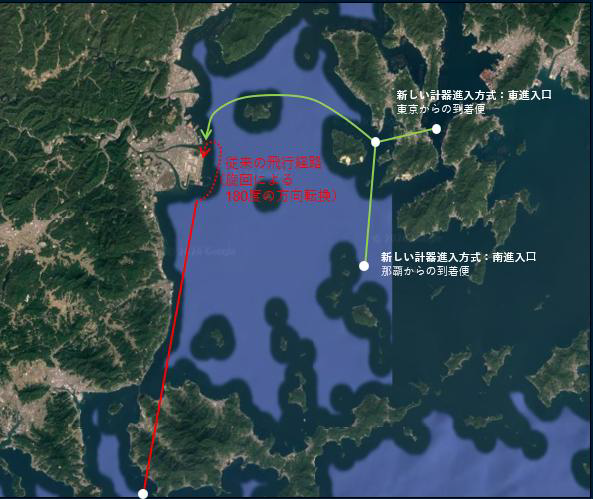
ANA's New Instrument Approach Procedure
MARINE CORPS AIR STATION IWAKUNI, Japan (July 10, 2026) –
Marine Corps Air Station Iwakuni has implemented a new instrument approach procedure for Runway 20, marking a major milestone in aviation safety and operational capability through a collaborative effort with All Nippon Airways (ANA), the Japan Civil Aviation Bureau (JCAB), the Federal Aviation Administration (FAA), and the Naval Flight Information Group (NAVFIG).
"For the first time in the history of MCAS Iwakuni, every aircraft operating here has a dedicated instrument approach to our southbound runway," said Col. Kenneth Rossman, commanding officer of MCAS Iwakuni. "This is a significant step forward for the installation that improves aviation safety, increases operational efficiency, and enhances our ability to safely manage both military and civilian air traffic. By reducing the need for more complex arrival procedures and opposite-direction operations, we can move aircraft more efficiently while providing a safer and more predictable operating environment. This achievement also reflects the strength of our enduring partnership with the Government of Japan and the civil aviation community."
The new procedure became operational for ANA on July 9 following more than two years of planning, coordination, testing, and regulatory approval led by MCAS Iwakuni in partnership with ANA, JCAB, the FAA, and NAVFIG.
For decades, the terrain surrounding MCAS Iwakuni made it difficult to develop a safe, straight-in instrument approach to Runway 20. As a result, aircraft often relied on more complex arrival procedures during poor weather, increasing workload for both pilots and air traffic controllers while reducing the efficiency of flight operations.
"ANA is proud to have partnered with MCAS Iwakuni on this historic project," said Mr. Ken Goto, Flight Operations Standards Department, All Nippon Airways. "This new procedure represents a significant advancement in the safety and efficiency of our operations. I would like to express my sincere thanks to everyone involved for their dedication and cooperation over the past two years. Together, we have delivered a capability that will benefit both our passengers and the broader aviation community."
Max Williams, Air Traffic Control and Airspace Manager at MCAS Iwakuni, said the project demonstrates what can be accomplished through close cooperation between military and civil aviation organizations.
"I would like to sincerely thank ANA for their outstanding partnership throughout this effort," Williams said. "Their professionalism, technical expertise, and commitment to improving aviation safety were instrumental in making this capability a reality. This project demonstrates what can be accomplished when organizations from two nations work together toward a common goal. Working alongside ANA, JCAB, the FAA, and NAVFIG, we were able to overcome a unique challenge and deliver a lasting improvement to the safety and efficiency of flight operations at MCAS Iwakuni."
The new capability is expected to improve flight operations during adverse weather, reduce delays, increase the efficiency of airfield operations, and further strengthen the longstanding partnership between MCAS Iwakuni and Japan's civil aviation community. The project represents one of the most significant enhancements to the installation's instrument flight capability in its history and demonstrates the enduring commitment of U.S. and Japanese aviation organizations to advancing safe, efficient, and reliable flight operations.